
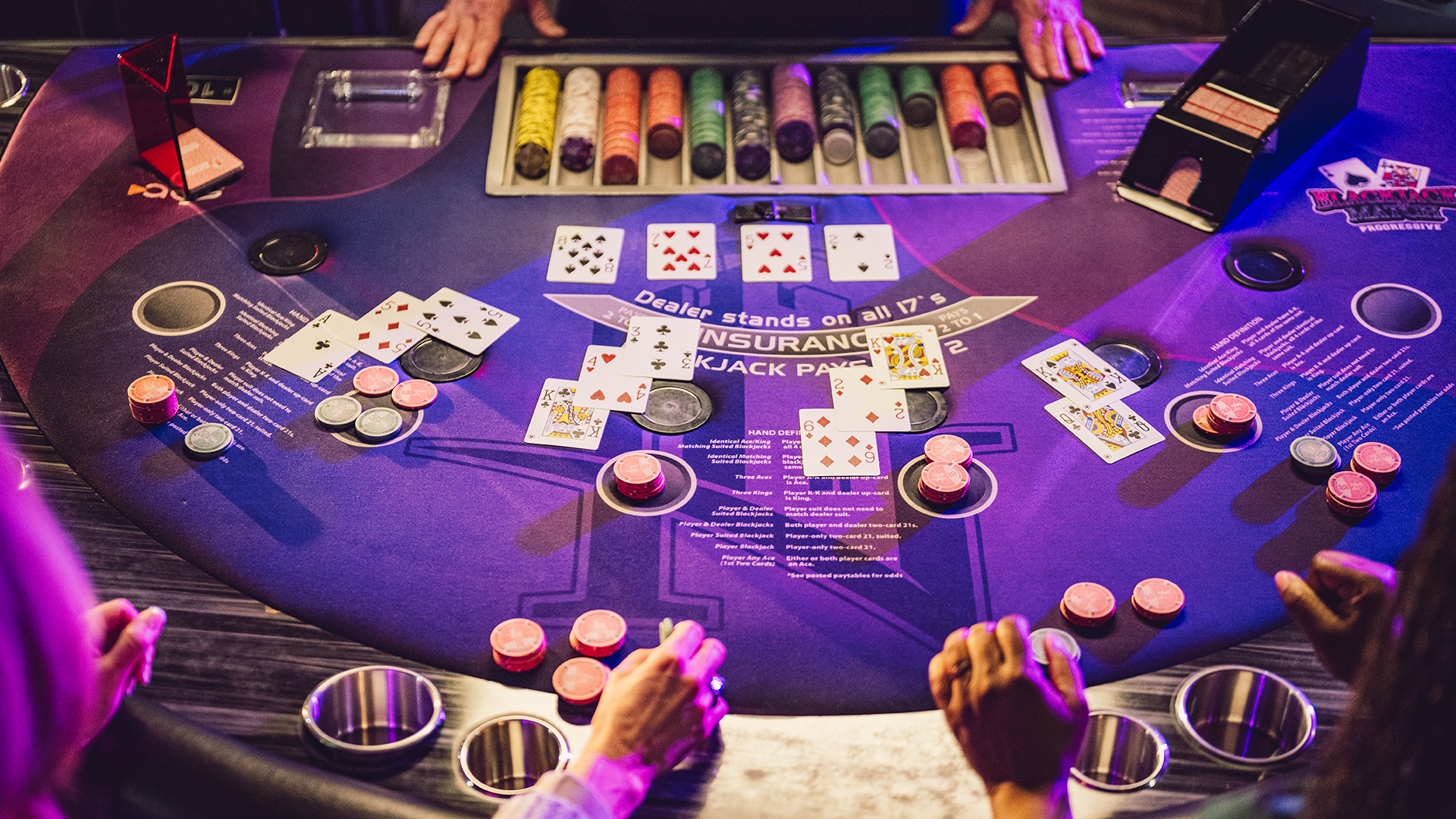
Sit down at a blackjack table for the first time, and you’ll notice the players barely speak. A tap here, a wave there and the dealer keeps the round moving.
Those small movements are blackjack hand signals, and each one tells the dealer what you want to do. Below is what each signal means and how to make it. New to the game? Start with how to play blackjack, then come back to the gestures.
How Signaling Works in Blackjack
At the blackjack tables at Newcastle Casino, you play against the dealer, not the other players. Even so, every table expects you to signal your move with your hands. Casino floors are loud, and a clear gesture is easier to read than a spoken word.
Overhead cameras record every hand, so a visible signal settles any question about what you meant. Say your action out loud if you like, but the gesture is what the dealer follows.
The Gestures You’ll Use at the Table
Here are the four moves you’ll use most, plus two you’ll see less often. The blackjack lingo guide defines each as a term.
| Move | Face-up | Face-down | What happens next |
| Hit | Tap or scratch the felt | Scrape the card edges toward you | One more card |
| Stand | Wave a flat hand, palm down | Slide the cards under your chips | Your turn ends |
| Double down | Match your bet, point one finger | Match your bet, cards face up | One card, then your turn ends |
| Split | Match your bet, two fingers up | Match your bet, pair face up | Two hands, played one at a time |
| Insurance | Chips on the insurance line | Chips on the insurance line | Settled before the round goes on |
| Surrender | A line behind your bet, or say it | Say it out loud | Half your bet returned |
Hit: Ask for Another Card
A hit means asking the dealer for another card. In a face-up game, tap or lightly scratch the felt beside your cards with a finger. In a face-down game, scrape the card edges against the felt toward yourself. You can hit as often as you like until you stand or your total goes over 21.
Stand: Keep the Hand You Have
A stand means keeping the hand you have and taking no more cards. Wave one hand flat over your cards, palm down, in a slow, level motion. In a face-down game, slide your cards under your chips instead, without moving the chips.
Double Down: Double the Bet for One Card
A double down lets you double your bet in exchange for one more card, and only one. Place a matching stack of chips beside your original bet, not on top of it. Then point at the table with a single finger. That one finger is the double down hand signal, and it tells the dealer you’re taking exactly one card.
Split: Turn a Pair Into Two Hands
A split turns a pair into two separate hands, each played on its own. Place a second bet matching your first next to it, not on top, then hold up two fingers in a V shape. The dealer separates the pair and deals a new card to each. Play the first hand out, then move to the second. Rules on splitting again vary by table, so ask the dealer if you draw another pair.
Insurance: Cover the Dealer’s Ace
Insurance is offered only when the dealer’s face-up card is an ace, and it pays if the dealer turns over blackjack. It costs up to half your original wager. To take it, place chips on the insurance line in front of your bet. The dealer usually asks the table out loud first, so a spoken answer is normal. Whether the insurance side bet is worth taking is a separate question from how to signal it.
Surrender: Give Up Half Your Bet
Some tables let you surrender, which means giving up the hand and getting back half your bet. Where it’s available, it’s usually handled by saying “surrender” out loud, though a few rooms use a gesture: draw a line behind your bet with one finger. Ask the dealer first, since surrender rules vary more than the other moves.
Why Blackjack Hand Signals Matter
Blackjack hand gestures do more than move the game along. Here’s why the table leans on them:
- Hands stay visible: Keeping your moves in the open shows you aren’t touching the cards or chips mid-hand.
- Steady pace: Once you know the blackjack signs, you can act on your turn without slowing the table down.
- Fewer mistakes: A slow, clear gesture gives the dealer time to confirm before the next card.
When Hand Signals Are Expected
On every turn you take. Dealers expect a gesture even when you say your action out loud, because the movement is what settles the record. Face-up and face-down games ask for slightly different moves, so if you’re unsure at a new table, ask the dealer before the cards come out.
Common Questions About Blackjack Hand Signals
What happens if I signal the wrong move?
The dealer will pause and ask you to confirm what you meant. New players do this often, and it isn’t treated as a mistake.
Do all casinos use the same signals?
The core ones, like the tap to hit and the wave to stand, are close to universal. The details shift between face-up and face-down games, and a few rooms handle surrender differently. When in doubt, ask the dealer.
Why does the dealer handle my cards?
In games dealt face up, the dealer is the only one who touches the cards, so nothing can be marked, bent or swapped mid-hand. Your chips stay yours to place, but once a bet is down, you leave it alone. That’s also why a double down or split bet goes beside your original stack rather than on top: it keeps the first wager clear.
Try It at the Table
Learning the blackjack signs takes a hand or two, and after that they feel automatic. Take a seat at Newcastle Casino, tap for a card and see how fast they become second nature.









Social Media
Connect with us to stay up to date on Newcastle Casino and you will always be in the know.