
Blackjack Terms Every Player Should Know Before Sitting at the Table
Walking up to a blackjack table becomes much easier when you understand the language players use. A few key blackjack terms help you follow the action, recognize your options and keep up with the pace of the game. Instead of guessing what the dealer or other players mean, you will quickly understand what is happening during each hand. Once you learn the basics, the table feels more familiar, and the game becomes much more enjoyable.
Card Talk: Understanding Hand Values and Totals
Before focusing on strategy or betting decisions, it helps to understand how blackjack cards are counted. The card game itself is simple. Number cards keep their face value, while kings, queens and jacks count as 10. Aces are the only flexible cards because they can count as either 1 or 11, depending on which value works best for your hand.
Because the ace can change value, players often describe their hands using specific terms. This blackjack lingo makes it easy for everyone at the table to understand what kind of hand someone is holding.
- Blackjack: A two-card hand that includes an ace and any 10-value card.
- Bust card: A card that pushes a hand over 21.
- Hard hand/total: A hand without an ace, or one where the ace must count as 1 to avoid going over 21.
- Natural: Another name for a blackjack dealt in the first two cards.
- Soft hand/total: A hand that includes an ace is counted as 11 without going over 21.
- Stiff hand: A weak total, usually 12 through 16, where one more card could easily cause a bust.
- Total: The combined value of all the cards in your hand.
Blackjack Slang and Player Actions
After the cards are dealt, players must decide what to do next. The words used for these decisions are the most common blackjack lingo you will hear at the table.
- Bust: Your hand goes over 21, which ends the round for that hand.
- Double/Double down: Increase your bet by doubling it and take exactly one more card.
- Early surrender: A rule that lets you give up the hand before the dealer checks for blackjack and gets back half your bet.
- Five card charlie: A rule variation where a player automatically wins after drawing five cards without going over 21.
- Hit: Ask the dealer for one more card.
- Late surrender: A rule that lets you surrender after the dealer checks for blackjack and still recover half your bet.
- Push: A tie between you and the dealer where your bet is returned.
- Split: Turn a pair into two separate hands that are played individually.
- Stand: Choose not to take another card and keep the hand you have.
- Surrender: Give up the hand early and receive half your bet back if the table rules allow it.
How These Moves Look During a Real Hand
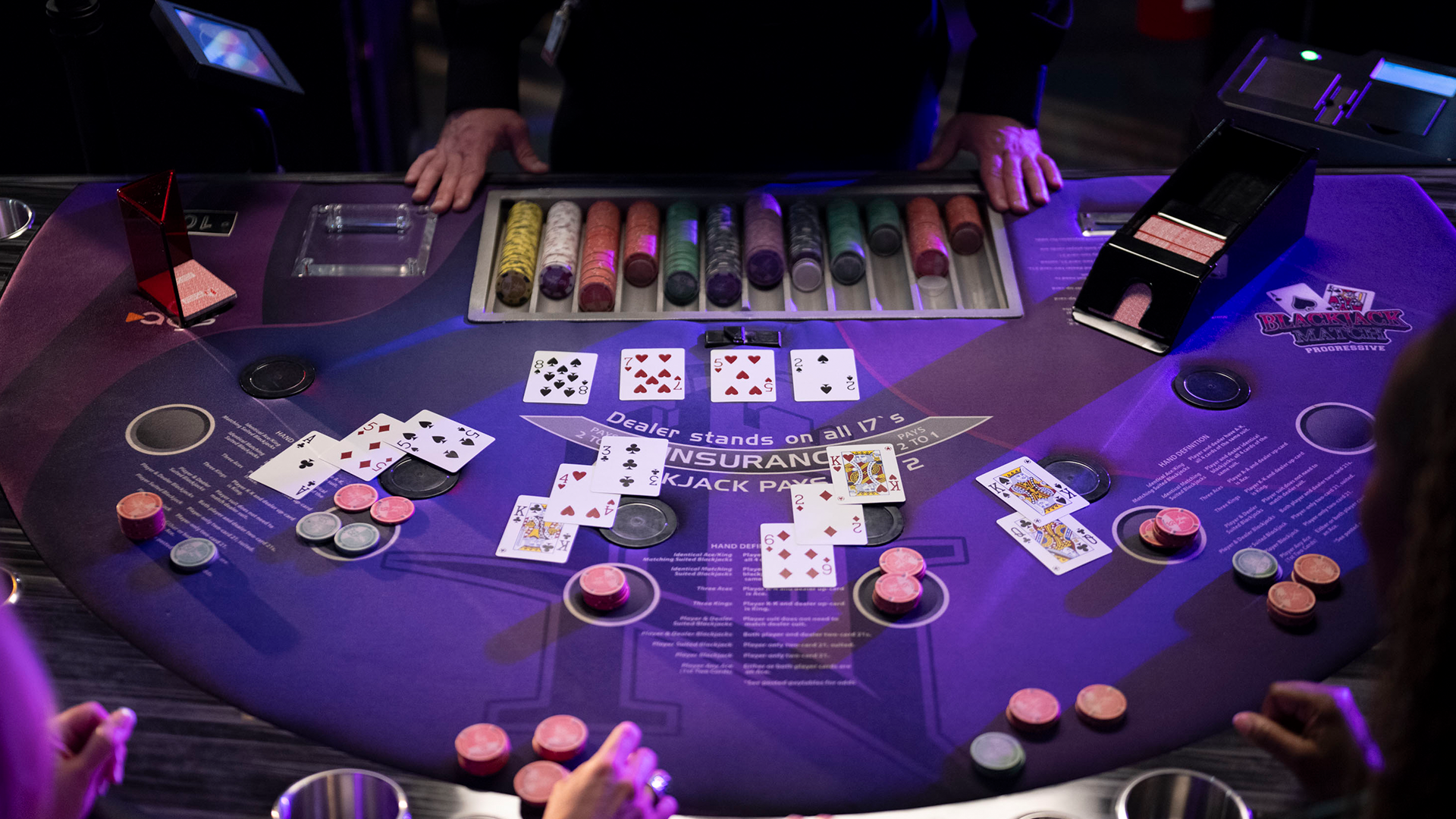
During a real hand, these decisions happen fast, which is why blackjack slang is so commonly used at the table. If you are dealt a 10 and a 6, you might stand against a weaker dealer card or hit if the dealer shows a stronger card. If your first two cards are the same, such as two 8s, you may have the option to split them and play two separate hands. Some tables also allow surrender, which lets you end the hand early and get back half of your bet.
Blackjack Terms: Seats, Dealer Cards and Table Positions
Blackjack tables also use a few terms to describe where players sit and how the dealer handles the cards. These phrases help explain the order in which players act during a round.
- Action: The total amount of money being wagered during the game.
- Advantage: An edge that favors either the player or the casino in a blackjack game.
- Advantage player: A player who uses skill or strategy to improve their odds.
- Back counting: Watching a table and tracking cards before deciding to join the game.
- Bankroll: The money a player sets aside specifically for blackjack.
- Bet spread: Changing your bet size depending on the situation.
- Burn card: A card removed before dealing begins.
- Card counting: A method of tracking which cards have already been played to estimate what may remain.
- Cut card: A marker placed in the deck to show when the cards will be reshuffled.
- CSM (Continuous Shuffling Machine): A device that reshuffles cards during the game.
- Dealer: The casino employee in charge of dealing cards and supervising the action at the blackjack table.
- Deck penetration: How deep into the shoe the dealer deals before reshuffling.
- First base: The player sitting on the dealer’s far left who receives cards first and acts first.
- Flat bet: Betting the same amount on every hand.
- Heads up: A game with only one player sitting at the table with the dealer.
- Hole card: The dealer’s face-down card that is revealed later in the round.
- Pitch game: A blackjack game where cards are dealt face down, usually with fewer decks.
- Round: One complete cycle of play, from the deal to the result of the hand.
- Running count: The current count used while cards are being tracked during play.
- Shoe: The device that holds several decks of cards used for dealing.
- Shoe game: A blackjack game that uses multiple decks placed inside a shoe.
- Third base: The seat on the dealer’s far right that takes the final turn before the dealer plays.
- True count: The running count is adjusted based on how many decks remain in the shoe.
- Upcard: The dealer’s face-up card that everyone at the table can see.
These position names often come up in player conversations. For example, some players jokingly blame third base when a card changes the outcome of a hand. In reality, the seat itself does not change the long-term odds, but the phrases remain part of blackjack culture.
Speak the Language and Level Up Your Game
You do not have to study a blackjack glossary for hours before you hit the floor. Simply learning the essentials will help you make smarter moves and keep up with the table’s energy. As these blackjack terms become part of your regular vocabulary, you can focus less on the words and more on the excitement of the hand.
Ready to see those cards fly? Head over to Newcastle Casino to put your skills to work and enjoy the game for yourself.
Blackjack Frequently Asked Questions
How does basic strategy guide your decisions at the table?
Basic strategy is a set of recommended moves based on your hand and the dealer’s visible card. For example, it often suggests standing on 17 or higher and hitting on totals of 11 or lower.
When should you consider insurance in blackjack?
Insurance is an optional side bet offered when the dealer’s upcard is an ace. For example, if the dealer’s hidden card is a 10, the insurance bet pays 2 to 1.
What does even money mean in blackjack?
Even money allows you to take a guaranteed 1-to-1 payout when you have blackjack and the dealer shows an ace. For example, instead of waiting to see if the dealer also has blackjack, you can accept the payout immediately.
Why is a stiff hand considered risky?
A stiff hand is usually a total between 12 and 16, where taking another card could easily push the hand over 21. For example, a hand like 10-16 leaves very little room for a safe hit.
What does H17 mean in blackjack rules?
H17 indicates that the dealer must draw another card on a soft 17. For example, if the dealer has an ace and a 6, they must draw another card.
What does S17 mean at a blackjack table?
S17 means the dealer must stand on a soft 17 rather than draw another card. For example, if the dealer has an ace and a 6, the dealer must keep that total of 17.









Social Media
Connect with us to stay up to date on Newcastle Casino and you will always be in the know.