
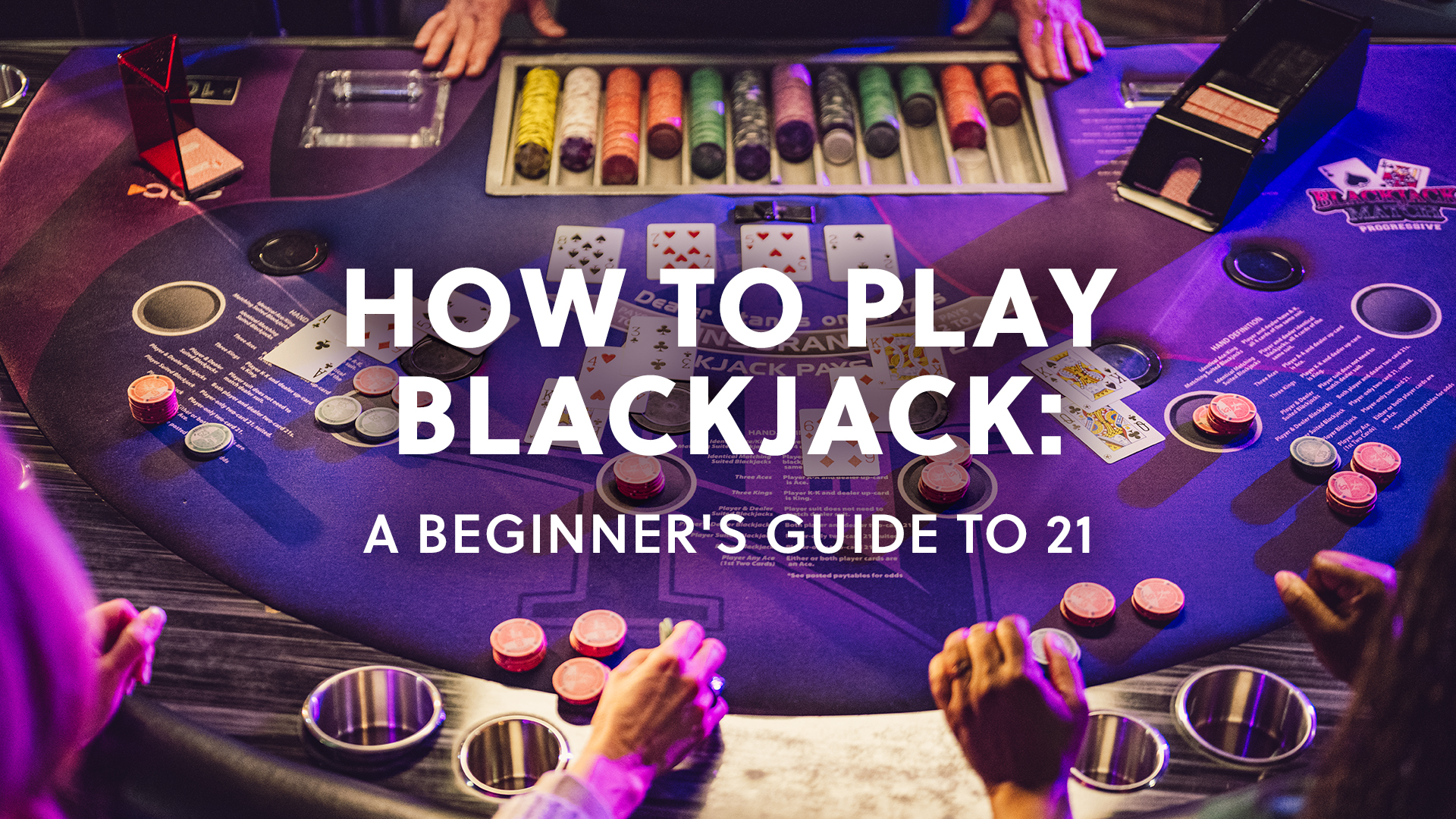
Blackjack, also known as “21,” is one of the most popular and widely played casino card games around the world. Why? It’s fast-paced, easy to learn and offers some of the best odds you’ll find at the casino. Whether you’re walking into your first casino or just curious about how the game works, this guide breaks down the official blackjack rules, step by step, so you can play with confidence.
Basic Blackjack Game Rules & Lingo
The goal of blackjack is simple: beat the dealer without going over 21. Sounds easy, right? Here’s how it works:
- You play against the dealer, not the other players.
- Number cards (2 through 10) count as their face value.
- Face cards (jack, queen, king) are each worth 10.
- Aces can count as 1 or 11, whichever helps your hand most.
You start with two cards. The dealer has two cards as well. Usually one face up, one face down.
Your mission? Build a hand closer to 21 than the dealer’s hand, or hope the dealer “busts” (goes over 21).
What Is the First Thing You Should Learn Before Playing Blackjack?
The first thing you should learn is hand values and what the basic player actions mean:
Hit
This means you want another card. You don’t have to say “hit”—most players just tap the table with a finger or wave their hand toward themselves. Saying “hit” out loud works, but hand signals make sure the cameras see your choice. If you don’t signal clearly, the dealer might pause the game until you do.
Stand
You’re happy with your hand and don’t want any more cards. Say “stand,” or better yet, wave your hand palm-down over your cards. Again, the hand signal is for the cameras so there’s no confusion about what you wanted to do.
Double Down
Doubling down means you double your bet and get one more card—no more, no less. You do this when your first two cards are strong (like 10 or 11) and the dealer shows a weak card. To signal, you place another stack of chips next to your original bet and hold up one finger to show you only want one card. If you don’t know this move, you’re missing one of the key strategies to beat the house.
Split
When you’re dealt two of the same card—say two 8s—you can split them into two separate hands. This costs you another bet, but gives you a better shot at winning. To split, you place an equal bet next to your original one and make a V sign with your fingers. If you skip splitting on a pair like aces or 8s, experienced players will know you don’t understand the game.
Bust
This means your hand went over 21 and you automatically lose. You don’t have to do anything special here—the dealer will announce it and take your cards and chips.
Push
If you and the dealer have the same total, it’s a tie—called a push. Your bet stays put. Nothing won, nothing lost.
Blackjack
A “blackjack” is when you’re dealt an ace and a 10-value card right off the bat. It’s the best hand you can have and usually pays three to two.
Dealer Upcard
This is the card the dealer shows face-up. Smart players always pay attention to this, because it helps you decide whether to hit, stand, double or split.
Step-by-Step Guide to Playing Blackjack
Learning how to play casino blackjack isn’t just about knowing the rules, it’s about understanding the full flow of a hand, the choices you’ll have and why you make those choices. This is your full walk-through, start to finish, so you can sit down at the table feeling confident and in control.
1. Buy Chips
Before you can jump into the game, you’ll need to get chips. Casinos don’t allow cash bets directly on the table. Here’s how you do it:
Step up to the blackjack table, but don’t hand your money to the dealer. Instead, place your cash flat on the felt. Dealers aren’t allowed to take anything from your hand for security reasons. The dealer will then spread your money out neatly on the table so that the overhead cameras can record the transaction.
Once verified by the floor supervisor (also called the “pit boss”), the dealer will count out your chips and push them toward you. That’s your official buy-in.
Pro Tip: Always buy in between hands. Interrupting an active game to buy chips is considered bad etiquette and will annoy the dealer and other players.
Want to skip this step? Head to the cashier’s cage in advance and bring chips to the table ready to go.
Now that you’ve got your chips, you’re ready to make your first bet. You’ll see a circle or square in front of your seat. That’s where you place your bet. The minimum and maximum bets will be posted at the table. Start with small bets until you’re comfortable with the game flow.
2. Place Your Bet
Once you’ve got your chips, it’s time to place your first bet. In front of every player is a marked betting circle (or sometimes a square). This is where your chips go before any cards are dealt.
Look for the posted minimum and maximum bet limits, usually displayed on a small plaque at the table. For example, a $10 minimum means you need to place at least $10 worth of chips in the circle to play that hand.
Place your chips neatly in the betting circle before the dealer starts dealing. Once the first card is dealt, bets are locked in. No adding or pulling back chips after that.
Pro tip: If you’re new, start with the table minimum. It helps you get used to the pace of the game without risking too much money right away.
Avoid stacking or scattering chips all over the place. The dealer needs to easily read your bet. And never touch your chips after the cards are dealt unless the dealer tells you it’s okay (like during a double down or split).
3. Get Your Cards
After all bets are placed, the dealer begins dealing cards. Every player at the table gets two cards that are dealt face up so everyone can see your hand. The dealer also takes two cards for themselves: one face up (called the upcard) and one face down (the hole card).
At this point, take a look at your two-card total and the dealer’s upcard. You’ll use this information to decide your next move.
For example:
- If you have a 10 and a 7 (total of 17), and the dealer is showing a 6, you might stand.
- But if you have a 9 and a 2 (total of 11), and the dealer shows a 4, it could be a great time to double down.
Don’t panic if you’re not sure what to do. We’ll get into player options next.
4. Make a Decision
This is where blackjack becomes more than just luck. It’s about making the right move at the right time. You now choose how to play your hand based on your cards and the dealer’s upcard.
Here are your options:
- Hit: Ask for another card to try to improve your total.
- Stand: Stay with your current hand — you’re done for this round.
- Double Down: Double your original bet and take only one more card. Ideal when you have a strong hand (like 10 or 11) and the dealer shows a weak upcard.
- Split: If your two starting cards are the same (like two 8s or two aces), you can split them into two hands, but you must match your original bet. You’ll play each hand separately.
Most casinos require you to signal your decision with hand gestures — not just words. For example:
- Tap the table to hit.
- Wave your hand side to side to stand.
- Place a second stack of chips next to your bet to double down.
- Say “split” and place an equal bet beside your original if you want to split.
Why hand signals? Because every move is recorded on camera for security reasons, and verbal commands aren’t enough.
5. Dealer’s Turn
How does the dealer play blackjack? Once every player has completed their hands, the dealer reveals their hole card.
Now it’s the dealer’s turn, and here’s the important part: they don’t make decisions the way you do. Dealers follow strict house rules that tell them exactly how to play their hand.
In most casinos, blackjack dealer rules go as follows:
- Hit on 16 or less
- Stand on 17 or higher
Some casinos use the rule “hit on soft 17,” which means the dealer will hit if they have a total of 17 that includes an ace counted as 11 (e.g., ace + 6).
There’s no bluffing, no strategy. It’s automatic. This consistency is what gives you the opportunity to play strategically and get the edge when you can.
If the dealer busts (goes over 21), everyone still in the hand wins.
6. Winning or Losing
Next let’s look at how to win at blackjack and how you can lose.
After the dealer finishes their hand, it’s time to settle up.
There are four possible outcomes:
- You win: If your final hand is closer to 21 than the dealer’s, or if the dealer busts, you win and get paid 1 to 1 on your bet.
- You lose: If you bust, or the dealer has a higher hand that doesn’t bust, your chips are collected.
- Push: If you and the dealer have the same total (e.g., both have 18), it’s a tie. Your original bet stays. No win, no loss.
- Blackjack!: If your first two cards are an ace + a 10-point card (10, jack, queen or king), you have a blackjack. This is the best hand in the game and usually pays 3 to 2 — meaning a $10 bet wins $15. (Some tables may only pay 6 to 5, so always check!)
Pro tip: Blackjack pays more than any other hand, but only if it’s in your initial two cards. If you hit to 21, it’s still a great hand, but it only pays 1 to 1.
Tips and Strategies for Blackjack Beginners
Start Small
When you’re first starting out, it’s tempting to chase big wins, but resist that urge. Start with the lowest minimum bets available at the table. Why? Because it gives you time to get comfortable with the flow of the game, learn from your mistakes and stretch your bankroll. Blackjack is a marathon, not a sprint.
Use Strategy Charts
Here’s the good news: you don’t have to memorize every possible hand combination to play well. Blackjack strategy charts exist for a reason they help give you blackjack instructions. These easy-to-read charts show exactly what action you should take based on your hand and the dealer’s upcard.
Example: If you have a 16 and the dealer is showing a 7, the chart will tell you whether to hit or stand. It’s all based on math and probability.
Some casinos even sell small laminated versions of these charts in their gift shops, or you can find free versions online before your trip. It’s not cheating. It’s smart playing.
Stick to Logic, Not Gut Feeling
Here’s the biggest mistake new players make: they “go with their gut.” Problem is, blackjack isn’t a guessing game. Every hand has an optimal mathematical decision. Using a strategy chart or basic strategy guide beats relying on feelings 100% of the time.
It might feel awkward at first, but trust the math. Over time, making the logical choice pays off.
Forget Card Counting
Yes, it’s been made famous by movies, but card counting is way harder than it looks. Plus, most modern casinos use multiple decks and shuffle often, making counting nearly impossible.
For beginners, your focus should be on learning good basic strategy, and not worrying about advanced tactics like counting. Besides, casinos will quickly show you the door if they think you’re trying to count cards.
Stick with solid fundamentals. It’s more fun, less stressful and gives you a real shot at steady wins.
Master these strategies and you’ll walk into any blackjack game feeling more prepared, more confident and more in control of your results.
Blackjack Etiquette at the Casino
Want to look like you actually belong at the table? Blackjack casino etiquette isn’t just about good manners. It’s about keeping the game moving, respecting the dealer and making sure you don’t unintentionally frustrate the people around you. Follow these basic rules, and you’ll come off like a pro, even if it’s your first visit.
Signal with Hand Gestures (Not Just Words)
One of the most important parts of blackjack etiquette is using hand signals to indicate your choices. Why? Because casinos use cameras (called “the eye in the sky”) to monitor every game, and verbal commands don’t always cut it.
These signals remove confusion for the dealer and provide clear proof of your intentions for the cameras.
Handle Your Chips Properly
Once your bet is placed and the dealer starts dealing cards, don’t touch your chips until the round is over. This rule protects against cheating, confusion or accidents. After the hand’s outcome is determined — win, lose or push — you can collect your winnings or prepare your next bet.
Tip the Dealer
If you’re on a hot streak or just having a good time, tip your dealer. It’s not mandatory, but it’s common courtesy, and dealers appreciate it. You can place a tip directly on the felt, or even better, you can bet for the dealer by placing a small chip on top of your main bet. If you win, the dealer wins too.
Don’t Blame the Dealer
The dealer doesn’t decide which cards come out. They just run the game according to strict rules. If you lose a hand or if the dealer pulls that frustrating “21” at the last second, don’t take it out on them. Stay cool, keep it fun and focus on what you can control: your decisions.
Ask Questions (The Right Way)
New to the game? Dealers want you to have a good experience. If you’re unsure about a rule or what your options are, politely ask when the action slows down. Just don’t hold up the game during fast moments unless absolutely necessary.
Learn these etiquette basics, and you’ll not only have a better experience yourself — you’ll make the game better for everyone at the table.
Start Playing Blackjack with Confidence at Newcastle Casino
Now that you know the basics—how the game works, the lingo and how to make your bets—you’re ready to sit down and play for real. Blackjack is one of the most approachable games in the casino, and it gives you some of the best odds on the floor if you play smart.
Want to sharpen your skills first? Practice at home, learn how to manage your bankroll and get comfortable with the flow of the game. Then, when you’re ready to put that knowledge to work, head to Newcastle Casino. Our blackjack tables are ready when you are, with friendly dealers who know how to help new players get started the right way.
Good luck at the tables.









Social Media
Connect with us to stay up to date on Newcastle Casino and you will always be in the know.